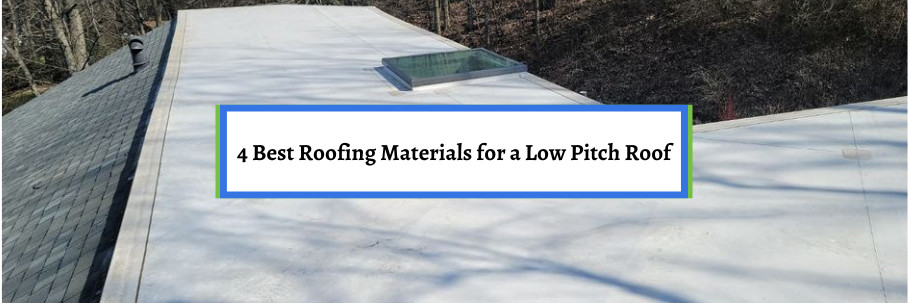

Do you have a low pitch or flat section on your roof? Are you wondering what the best materials are specifically for low pitched roofs?
A low pitch roof is any roof with a slope less than a 2:12 pitch. It functions the same as a roof with a normal pitch by keeping your home dry.
However, it requires a specific roofing material to keep it leak-free because water can't flow down as easily. While this leaves you with fewer options than you typically have for a roof replacement, there are still multiple low pitch roofing material options.
But of the options available, which are the best?
For over 35 years, the team at Bill Ragan Roofing has helped homeowners choose the right roofing material for their upcoming roofing project. Now, I’ll help you find the perfect fit for your low pitch roof.
In this article, I break down the lifespans, warranties, pro, and cons of the following 4 best roofing materials for a low pitch roof:
- PVC roofing membrane
- TPO roofing membrane
- EPDM roofing membrane
- Standing seam metal roofing
1. PVC roofing membrane
PVC (polyvinyl chloride) is a single-ply white or gray membrane used in commercial and residential roofing. It's a great choice for any flat roof over a living space or bedroom because the light colored membrane offers reflective qualities.
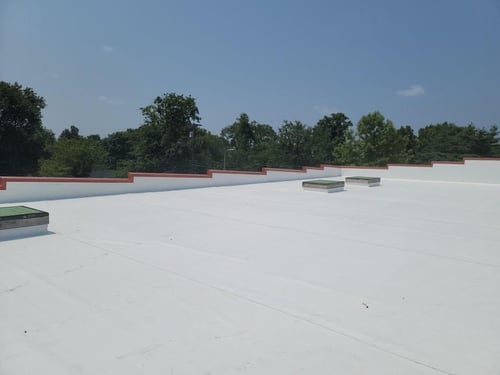
Lifespan: 25 years
Material warranty: 10-30 years (depends on the manufacturer)
PVC membrane pros:
- Durability
- Resistant to chemicals and grease
- Energy efficient
- Fire resistant
- Flexibility in cold and hot climates
PVC membrane cons:
- Expensive
- Gets dirty easily
- Not very eco-friendly
- Heavier than other membranes
- Shrinks in areas with extreme temperature changes
- Specialized installation
The white or gray membrane gives PVC great reflective properties. The chemical and grease resistance makes it a more popular choice for commercial than residential.
However, it's still used on homes and lasts up to 25 years if the membrane is properly installed in moderate climate.
2. TPO roofing membrane
TPO (thermoplastic polyolefin) is a single-ply white, light gray, or tan membrane used in both commercial and residential roofing. Like PVC, the light color options of TPO membranes offer reflective properties.
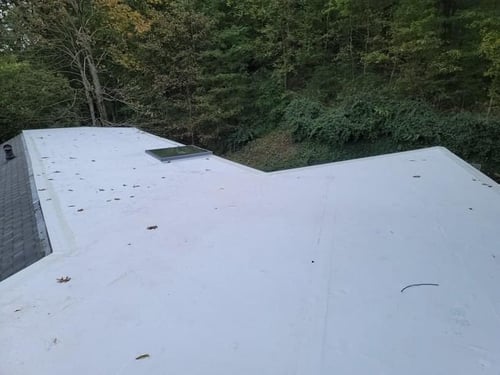
Lifespan: 15 to 20 years
Material warranty: 10-30 years (depends on the manufacturer)
TPO membrane pros:
- More affordable than other membranes
- Energy efficient
- Durable in all climates
- Eco-friendly
- Lightweight and flexible
- Resistant to mold and algae
TPO membrane cons:
- Newer to the roofing industry
- Quality varies by manufacturer
- Gets dirty easier
- Doesn’t last as long as TPO or EPDM
- Can rip from foot traffic
- Specialized installation
If you have a flat roof over a bedroom, TPO is a great option because the white membrane's reflectiveness helps keep the room cooler. It’s not as durable as other membranes, but you can get up to 20 years (maybe a little longer) out of a TPO membrane flat roof as long as it’s installed properly.
3. EPDM roofing membrane
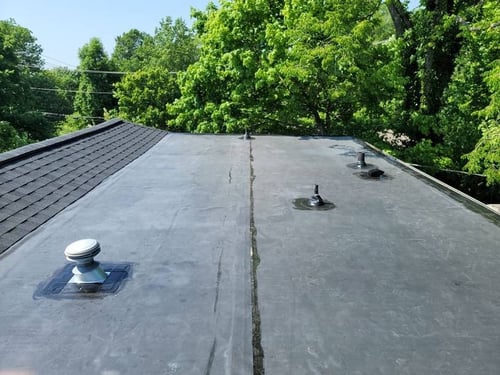
EPDM roofing membrane (ethylene propylene diene monomer or terpolymer) is a synthetic rubber black membrane commonly used in commercial and medical facilities. However, EPDM has become more popular in residential roofing for its durability.
Lifespan: 25 to 30 years (fully adhered 0.060 thickness)
Material warranty: 10-30 years (depends on the manufacturer)
EPDM membrane pros:
- Long history
- Durable (fully adhered 0.60-thickness)
- Stands up well to storm damage
- Doesn’t show dirt
- Eco-friendly
EPDM membrane cons:
- Expensive
- Absorbs heat
- Not very energy efficient in hot climates
- Damaged by petroleum products
- White color available, but more expensive
The black rubber material absorbs heat, which makes energy efficiency in living spaces. However, white EPDM is available at a more expensive price.
EPDM is an extremely durable membrane and is basically like having a bulletproof rubber roof system. That's why you can expect to get 25 to 30 years out of a fully adhered 0.060 thickness EPDM flat roof.
4. Standing seam metal roof
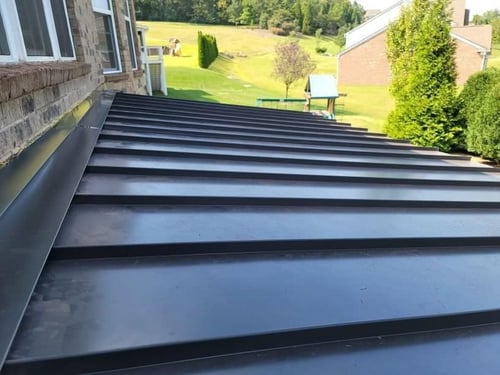
A standing seam metal roof system is a series of metal panels that are locked together at the seams or seamed mechanically. This allows for panels to expand and contract freely when the metal panels go through thermal expansion.
Just know that a standing seam metal roof does need a little bit of pitch (slope). So, getting a metal roof on a flat roof will require creating some angle with tapered insulation boards.
Lifespan: 30 years (up to 50 in the right conditions)
Material warranty: 30-year paint warranty on the Kynar 500 painted finish (steel only)
Standing seam metal roofing pros:
- High curb appeal
- Versatility (used to accent asphalt shingle roofs)
- Color options
- Long-lasting
- Durable
- Virtually maintenance free
Standing seam metal roofing cons:
- Expensive
- Requires a little pitch to drain properly
- Can be damaged by hail
- Potential for oil canning
- Makes noise when it rains
- Hard to repair
A standing seam metal roof is a great roofing material for a flat roof if you have the budget. It will have a better aesthetic, color options, and is longer lasting than the membrane roof systems.
However, it's more expensive than the membranes, and may need some build up to reach the minimum slope requirements for metal roofing.
Why shouldn’t you install asphalt shingles on a low pitch roof?
After reading this article, you’re probably wondering why asphalt shingles aren’t on the list. A roof is considered low pitch when its pitch is below a 2:12.
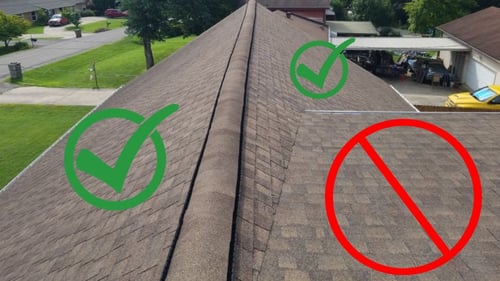
Per shingle manufacturers’ installation instructions and/or codes, a low pitched (or flat) roof is not steep enough for shingles to be installed. This is simply because shingles aren’t meant to hold sitting water that can form on a low pitch or flat roof.
Sitting water will drastically shorten an asphalt shingle's lifespan and create a leak if nail pops or other problems are in the area. No matter what, asphalt shingles shouldn’t be installed on a roof with a 2:12 pitch or less.
Not only does this lead to problems, but the shingle manufacturer won’t warranty the area because their specific installation instructions weren’t followed.
How much does installing these roofing materials on a low pitch roof cost?
Now you know the best materials for a low pitch roof, how long they’ll last, and why you shouldn’t use asphalt shingles on a low pitch roof. All of these materials are great options for your low pitch roof.
The important thing is to choose the one that’s right for your situation. However, there’s still one more important decision-making factor that’s not covered.
This is how much these materials cost to install on your low pitch roof. After all, it’s hard to truly make the right decision if you don’t know which one fits your budget.
Unfortunately, it’s hard to find realistic pricing for roofing. Which is why I wrote another article breaking down how much these low pitch roofing materials cost.
Check out How Much a Flat Roof Replacement Costs to learn the budget you’ll need for each low pitch roofing material.