
Considering metal roofing? Are you wondering what metal materials and components make up a metal roof?
Like all roofs, a metal roof is a combination of multiple components that come together to form a roof system. While the panels make up the bulk of a metal roof, each component has a specific function to ensure your home stays leak-free.
But learning what they are and what they do isn’t the only reason you need to know about metal roofing components. You also need to ensure all of them are included in your metal roof estimate, so you get exactly what you pay for.
So, what are the components that make up a metal roof system?
For over 35 years, Bill Ragan Roofing has helped homeowners learn everything they need to know about their metal roofing project. That's why I’ll break down the all components that make up a metal roof system.
By the end of this article, you'll know more about the following metal roofing components:
- Roof decking
- Lock strip
- High heat ice and water shield
- Metal panels
- Clips
- Pipe boots
- Z bar
- Ridge capping or transition metal
1. Roof decking
Roof decking (also called sheathing) acts as the foundation of a metal roof system. These wooden boards (plywood, OSB, plank) are what the metal panels and metal components are installed on.
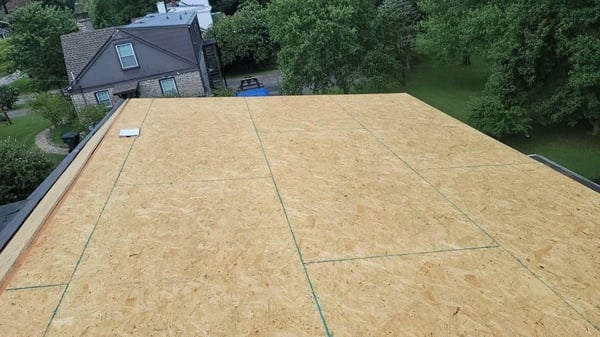
If there’s any rotten decking, your roofing contractor will have to replace it before they can begin installing your metal roof. However, your roofing contractor won’t know the exact amount that needs to be replaced until after they finish tearing off your old roof.
2. Lock strip
Lock strips hold your metal roof panels to your roof edges and keep them from lifting from strong wind. They're installed at the eaves (bottom edge of your roof at the gutter line) and rakes (the sloping side of your roof) for the panels to "lock" on to.
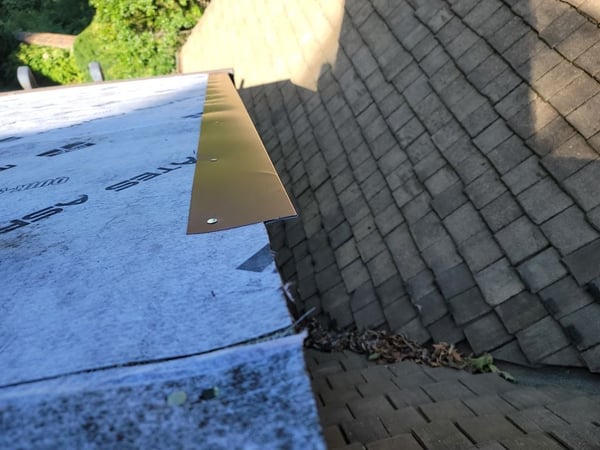
Lock strips will be the same color and gauge as the metal roof panels as well as the same painted finish. The painted finish protects your lock strips from the elements and keeps the color you choose from fading.
3. High-heat ice and water shield as underlayment
Roof underlayment is a felt (15 lb or 30 lb) or synthetic material used over roof decking to provide additional protection. But for a metal roof, the underlayment will be high-heat ice and water shield.
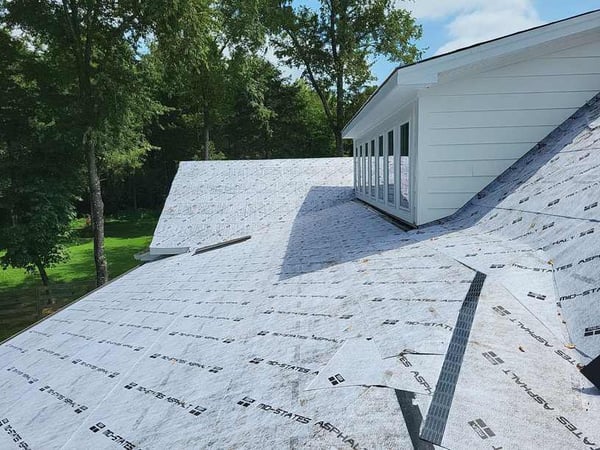
High heat ice and water shield is made with cotton-like fibers that don't stick to the metal panels as they expand and contract, which protects the underlayment from being destroyed.
Also, it's crucial that the high heat ice and water shield is installed over the lock strip at the eaves. If it isn't, the condensation under the ribs runs down the fascia board behind the lock strip and rots it out.
4. Metal panels
The metal panels make up the bulk of your metal roof system, with aluminum, steel, and copper being the most popular metal types. When installing, the metal panels are attached to each other on clips at the ribs.
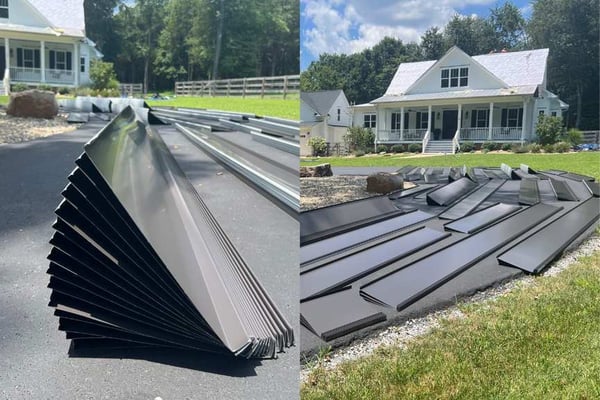 (Metal panels before installation)
This means they're free of any holes from nails or other fasteners, which is why a standing seam metal roof i preferred residential roofing. The lack of exposed fasteners means less leak potential, but it also allows the metal panels to glide back and forth freely as they go through thermal expansion.
5. Clips
The clips are fasteners that lock (clip) your metal panels together at the seam's (ribs) as they're installed across the roof. The clips are screwed to the vertical part of a panel using two gimlet screws before the next panel snaps over them, fastening it to the other panel.
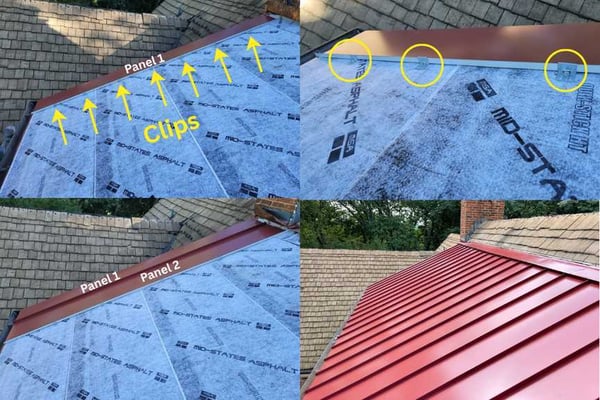
This continues across the roof until the last panel is attached to the lock strip on the other side of the roof.
6. Pipe boots
A pipe boot (also called roof boot) is a type of flashing that goes around the base of the pipes coming through the metal panels. Without them, water leaks down the pipes into your attic and home.
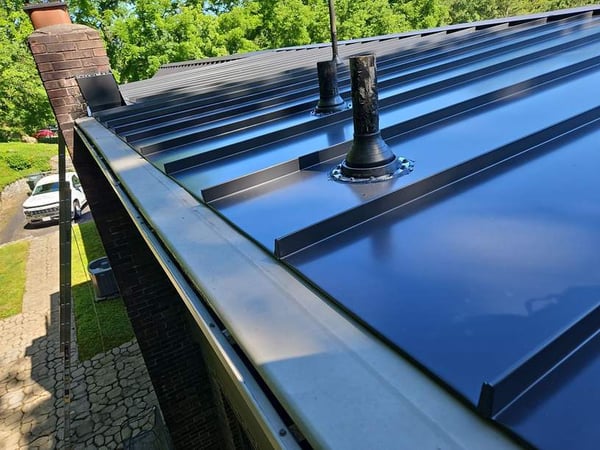 There are pipe boots made specifically for metal roofing, mainly because the boots need to be flush with the metal to prevent leaks. That's why you need an experienced metal roofing contractor who knows the right way to do things.
7. Z bar
A z bar is a piece of metal bent in the shape of a “Z” that is 1/8th of an inch taller than the ribs on the metal panels. After the metal panels are installed, this piece of metal flashing is installed at the top of the panels to fill in the spots between the ribs and the ridge or transition.
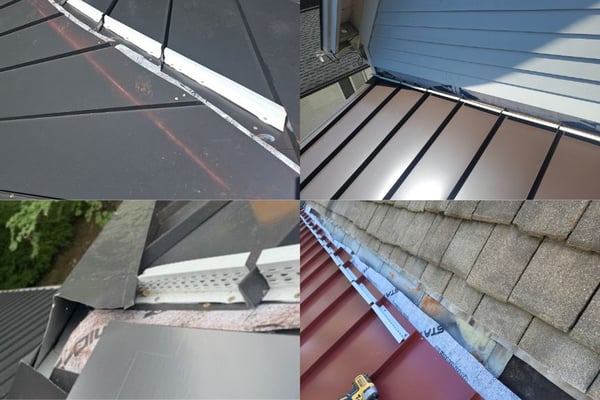
This protects the panels if water comes through the rib gaps at the ridge of your roof. Once the z bars are installed, the entire metal roof is ready to lock in at the ridge capping or a transition.
8. Ridge capping or transition metal
Ridge capping is installed at the peak where two slopes of a roof meet. Like every other metal component, it will be the same type and color as your metal panels.
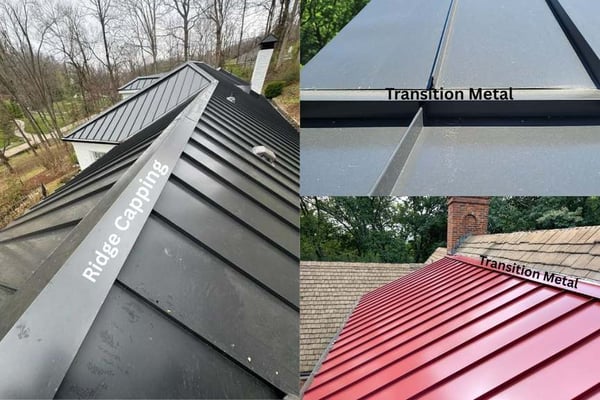
But if the metal panels are coming from a low slope roof to a steeper slope or tying into another roofing material, you’ll need transition metal instead of ridge capping. The transition metal will come down the roof and out 6 inches to ensure there's a straight plane, across and then it’ll lock onto the Z bar.
Once your ridge capping or transition metal is installed, your metal panels will be completely locked in, and you’ll have your new metal roof.
Is metal roofing right for you?
Now you know the 8 components of a metal roof, their function, and where they're installed. Every component listed here must be included in your metal roof installation.
The last thing you want is to invest in a new metal roof just to have it ruined because something is missing. However, there’s still much more to learn about metal roofing other than the components.
After all, it doesn't really help you determine if metal roofing is right for you. That’s why I wrote another article breaking down the main advantages and disadvantages when getting a metal roof for your home.
Check out The Pros and Cons of Metal Roofing to determine if a new metal roof is the right roofing material for your upcoming roof replacement.
