
Did your area just get hit by a hail storm? Do you have people knocking on your door saying your roof has hail damage?
Hail damage is the main type of insurance claim in the roofing industry today. However, most homeowners don't know their roof was potentially impacted until after a storm-chasing company comes knocking on their door.
This is where the scare tactics kick in, trying to rush you into signing something and filling a claim before you have a second to think about it. However, you actually have time to file an insurance claim, and, more importantly, find a local roofer.
So, how long do you actually have to file a claim for roof damage caused by hail?
For over 35 years, Bill Ragan Roofing has educated and guided homeowners through the insurance claim process. That's why I'll break down how long you have to file an insurance claim on your roof for hail damage, how to tell if hail actually damaged your roof, and much more.
This article answers the following questions:
- How long do you have to file a hail damage claim for your roof?
- What size hail is big enough to damage a roof to warrant an insurance claim?
- How do you identify if your roof has hail damage?
- Will hail damage lead to insurance paying for a full roof replacement?
How long do you have to file a hail damage claim for your roof?
You usually have 1 year from the day of the hail storm to file an insurance claim for hail damage to your roof. However, every insurance policy is different, and some even allow up to two years.
All you have to do is look at your insurance paperwork to get the exact timeline. But just know that insurance companies have access to hail maps that show when and where the hail storm hit.
So, the insurance company will look at these maps to see how long ago your home was impacted. While there's no reason to immediately panic when it comes to hail damage, you shouldn't wait too long to file an insurance claim.
What size hail is big enough to damage a roof to warrant an insurance claim?
Hail around 1” to 1.25” in diameter is usually enough to damage a roof to warrant an insurance claim. This is big enough to damage most asphalt shingles, but some shingles have higher impact-resistance ratings.
When it comes to impact resistant shingles, hail needs to be around 1.75” to 2” in size to damage shingles with a Class 3 or Class 4 impact-resistance rating. Hail this size will always lead to claims, but there’s a good chance hail around 1.25” in diameter will damage most roofs.
Hailstones big enough to cause dents are pretty noticeable if you know what you’re looking for, and an experienced roofing contractor shouldn’t miss them. But if you can’t see dents in the shingles, it doesn’t necessarily mean your roof won’t have hail damage.
How do you identify if your roof has hail damage?
Knowing what size hail damages a roof is one thing, but you most likely don’t have access to hail maps that show the sizes that hit your area. Fortunately, there are ways to identify hail damage if you know what to look for and where.
Obviously, you still need a professional opinion. However, this will help you determine if a hail storm actually damaged your roof before moving forward.
Dent on the shingles
The most obvious way to spot hail damage is to look for damage to the shingles. If the hail was big enough, you’ll see dents or bruises (around 1” in diameter) on shingles in various areas.
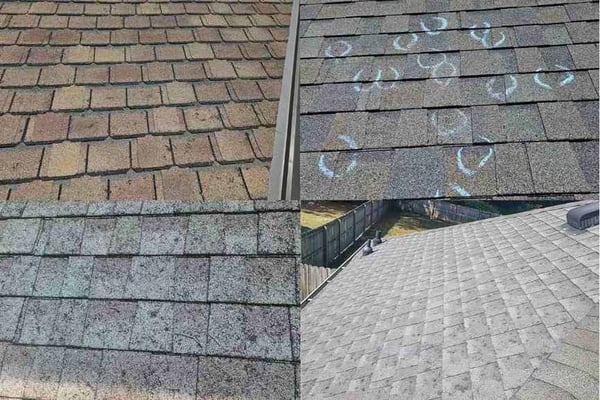
Finding dents means the shingles have granule loss, which compromises their integrity and shortens their lifespan. This is probably the hardest sign to identify without an untrained eye.
But if the damage is large enough and widespread, it’s pretty noticeable. Just keep in mind that you shouldn’t get on your roof to look for hail damage if you don’t feel comfortable on ladders or walking on a roof safely.
Damage to roof vents or metal
Not seeing clear indentations on shingles doesn’t mean they weren’t damaged. That’s why roofers and adjusters also look for dents to roof vents, roof flashing, or other metals on your roof.
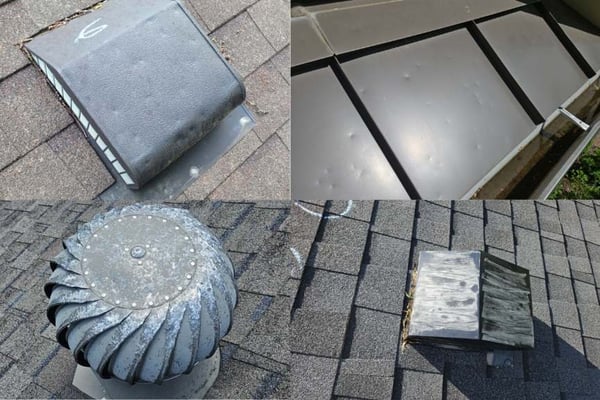
If the hail was strong enough to dent vents or metal, you’ll definitely have damage in other roof areas. On top of dents, hail can leave spatter marks that can also be a sign of damage.
This is a sign that hail cleared away dirt by leaving discoloration from multiple impacts. These marks help determine not only the size but also the direction of the hail.
Finding loose granules in gutters or around downspouts
Granules are pieces of asphalt embedded in shingles to make them fire-resistant, give them their color, and protect them from UV rays. They are crucial to your roof’s lifespan, but granule loss happens naturally as a roof ages and usually means you need a new roof.
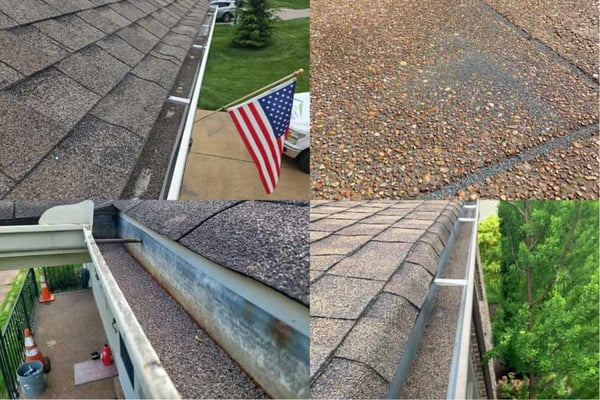
However, finding loose granules after a storm is also a sign that your roof may have hail damage. If hail was strong enough to cause granule loss, the integrity of your shingles is definitely compromised.
You can easily spot this by looking around your downspouts and inside your gutters for loose granules. Trust me, there will be a lot if your roof has hail damage.
Collateral damage to objects on the ground
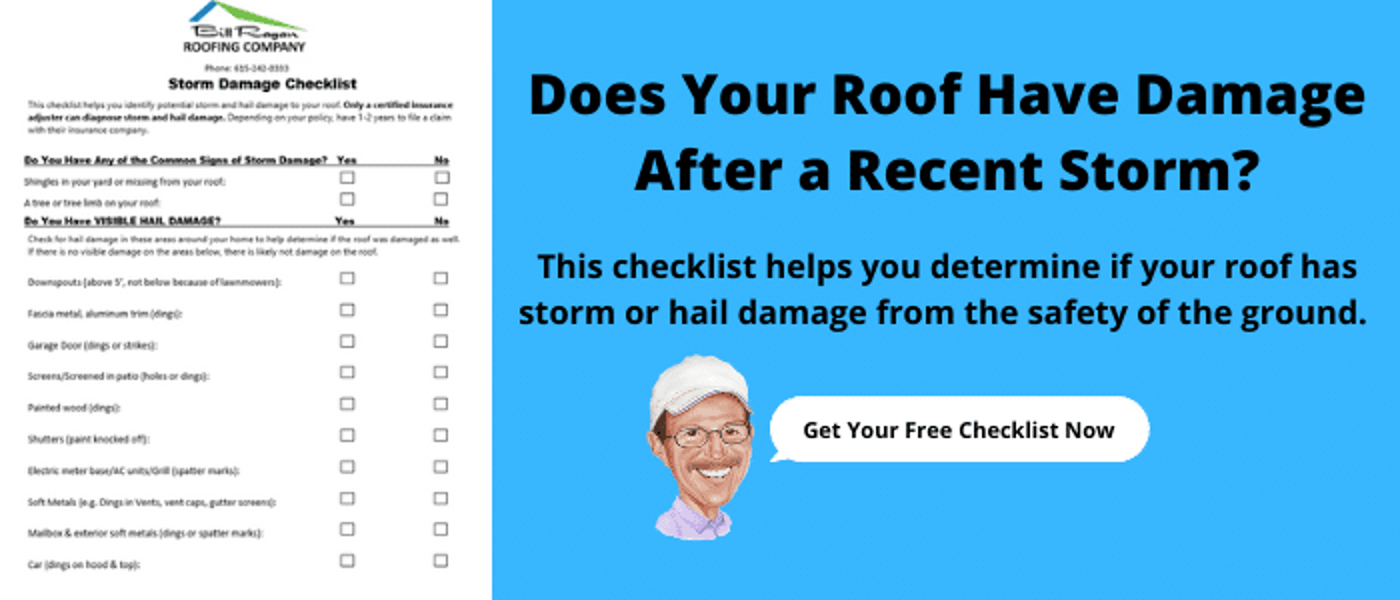
Getting on your roof is dangerous, and there’s no guarantee you’ll be able to identify hail damage while up there with an untrained eye. That’s why looking for collateral hail damage to objects and areas on the ground.
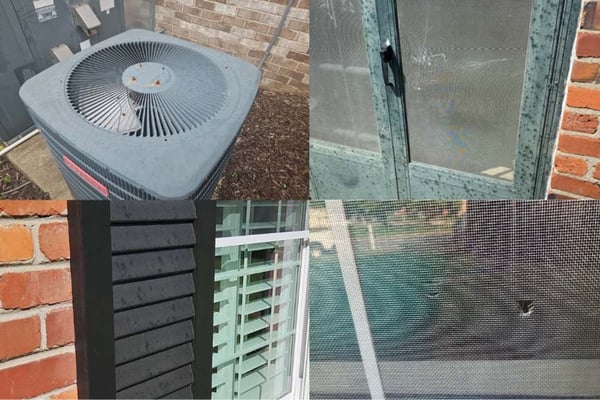
One of the easiest ways to identify collateral hail damage is by looking for dents in your gutters and downspouts. This is a good indication that your roof was probably damaged, but dents in downspouts need to be above 5 feet to avoid being blamed for something else.
While damaged gutters and downspouts are easy to spot, you should also look for the following:
- Dents or strikes on your garage door
- Holes in your window screens
- Dings or spatter marks on painted wood, shutters, or exterior doors
- Spatter marks or dings to your electric meter, AC unit, or grill
- Dents to your mailbox and other soft metals on your property
If you find any of the above, there's a good chance your roof has damage. However, it’s not 100% guaranteed that your roof has damage just because collateral damage is found.
Will hail damage lead to insurance paying for a full roof replacement?
If there are large hail marks and/or widespread hail damage, insurance will provide a payout for a roof replacement. However, your insurance policy (ACV or RCV) determines whether or not the insurance company pays for a full roof replacement.
If you have an ACV policy, insurance will only give you a check for what your roof is valued at the time of the claim. Unfortunately, this will never be enough for a roof replacement.
On the other hand, an RCV policy means the insurance company must provide a payout to replace the damaged roof with a brand-new version of itself. However, most claims need to be supplemented to get the maximum amount from the insurance company.
As long as you hire a roofing contractor with insurance experience, they’ll guide you through the process and help supplement your claim.
What can you expect when filing an insurance claim for hail damage to your roof?
After reading this article, you now know how long you have to file a claim, what hail damage looks like, and how to spot it safely from the ground. The first thing you need to do is contact your insurance company if you think your roof has hail damage.
But before you do, just know that the insurance claim process is long, confusing, and sometimes frustrating. It’s even more overwhelming if you’ve never been through it before.
Because of this, it’s important to understand the insurance journey you're about to embark on. That’s why I wrote another article breaking down the insurance claim process to help homeowners that are in your exact shoes.
Check out Homeowners insurance: The process to replace a storm damaged roof to learn what you need to know about filing a hail damage claim.