-1.png)

Are you fighting with the insurance company over a roof damage claim? Did they or your roofer bring up an ITEL report?
The insurance company is supposed to have your back when your roof gets damaged by a storm. Unfortunately, the amount of claims in recent years has led to a lot of pushback, wrongful denials, and dragging on the process.
Some homeowners hang their heads and accept whatever the insurance company says. But just know, there are options available.
One of these options is getting an ITEL report. But getting the actual report is just a small part of the process.
For over 35 years, Bill Ragan Roofing has guided homeowners through the insurance process and help them prepare for all possibilities. So, let's start with what an ITEL report is and go from there.
By the end of this article, you'll learn the answers to:
- What is an ITEL report?
- Why would you get an ITEL report for a roof damage claim?
- How does the ITEL report process work?
- How long does an ITEL report take?
- How much does an ITEL report cost?
What is an ITEL report?
ITEL Laboratories Inc (now part of Nearmap) is an independent laboratory that analyzes and matches building material, including cabinets, siding, flooring, and roofing. An ITEL report for roofing purposes is used to identify the specific color and manufacturer based on a shingle sample from the current roof.
After analyzing the sample, they’ll provide a report with the brand and specific color to determine if the same shingle is still available or it's discontinued or out of production. Once you get the report, the insurance company will determine next steps based on if the shingle is still available and/or if the color will match.
Why would you get an ITEL report for a roof damage claim?
Getting an ITEL report is how insurance companies determine if the shingle is still available to match the color so the roof still has a uniform appearance after repairs. However, ITEL reports are also utilized by roofers in states that have matching laws or requirements.
For example, in our state of Tennessee, an addendum was added to the Unfair Claim Practices Filing that went into effect starting 10/09/17.
0780-01-05-.10(1)(b) of the Unfair Claim Practices Filing states:
"When a loss requires replacement of items and the replaced items do not match in quality, color, or size, the insurer shall replace items so as to conform to a reasonably uniform appearance according to the applicable policy provisions. This applies to interior and exterior losses. The insured shall not bear any cost over the applicable deductible, if any."
So, if you're in a matching state, the entire roof must be replaced to ensure a uniform appearance instead of mismatched roof patches. But even if the same shingle is available, the color might not match because of the wear and tear a roof has gone through as it ages.
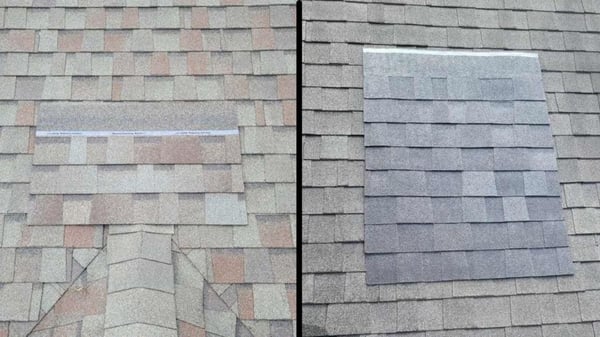 (Left: perfect match; Right: non-matching)
Whatever the reason, the insurance company will have to pay to replace your roof because no shingles match up perfectly with your current roof. Be aware, not every state has matching requirements, and some insurance companies are starting to exclude matching from their policies.
That's why ITEL reports are usually done as a last resort by roofers to hold insurance companies accountable if they try to play games. Even so, ITEL reports aren't 100% guaranteed to work to get a new roof through the insurance company.
How does the ITEL report process work?
Getting an ITEL report is actually a full process that starts with a sample. Sometimes the insurance company requests it and other times the roofer and homeowner utilize it after all other options are exhausted.
However, the process will still be the same. Let's look at the ITEL report process from sample to the final side-by-side submission.
Fill out the ITEL report form and send in a sample
The ITEL process starts with you, the roofer, or insurance company filling out the form from the ITEL website and sending a sample. After filling out all the relevant insurance and personal information, a Submittal Kit is sent to the address on the form.
Then your roofing contractor will take a shingle off, usually from an area that can’t be seen, and replace it with another like-colored shingle in the meantime. The shingle sample and filled-out form is sent through UPS or FedEx to the ITEL laboratories for analysis.
ITEL analyzes and sends back a report
After sending in your sample, it’s now a waiting game while ITEL analyzes the shingle. Once the shingle sample is analyzed, ITEL will send a report with the brand and color of the shingle.
You’ll then give the results to your roofing contractor so they can find the shingle specified in the report. If the shingle or color is discontinued, then the report is sent to the insurance company for next steps.
Learn if the shingle in the ITEL report matches your current shingle color
After getting the report and if shingle is still available, it must be tested to ensure it matches. First, your roofing contractor will go buy a bundle of the shingles (if they’re available and still in production) specified in the report.
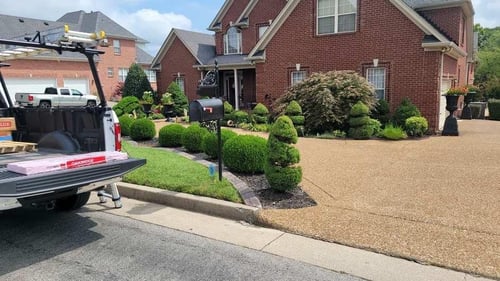
At your home, they’ll take a picture of the shingle bundle with the mailbox and house in the background to prove it’s your home and the shingles specified in the report are used. Depending on your roof’s pitch, they’ll put the shingles on your roof by nailing, taping, or laying them down to show the difference in color (if there are any).
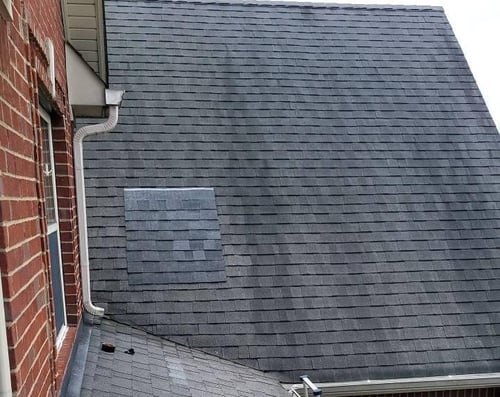 (New shingles taped on older roof to show color difference)
Your roofing contractor will take pictures showing the shade difference and send them to your insurance adjuster for review.
Determine next steps for repairs or a full roof replacement
What happens next with your insurance claim depends on if the shingles match your current shingles. If the shingles match perfectly, the insurance company will move forward with the repairs (patching) they approved, and your roofing contractor can get to work.
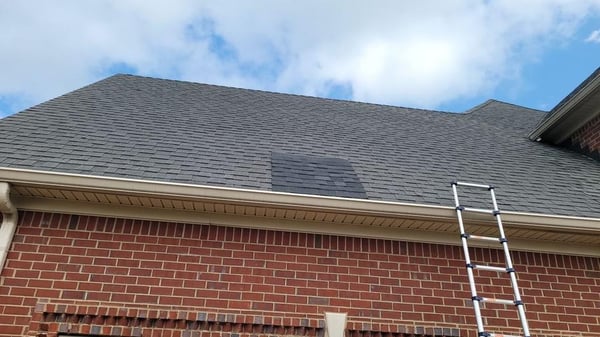
(Shingle color doesn't match)
But if the shingles don’t match or they’re discontinued, your insurance company should pay for a replacement if the shingles don’t almost or exactly match. But just remember that your state must have matching laws and your policy excludes matching to take advantage of the ITEL process.
How long does an ITEL report take?
The ITEL report process from beginning to end depends on how long it takes to do everything, from filling out the form and resubmitting the non-matching proof pictures. This is especially true based on the roofer's schedule, insurance's response time, ITEL's lab workload, and shipping.
However, most times an ITEL report takes around 7-10 days, give or take a few days. In the last year or two, ITEL has offered an ITEL now tool for quicker answers, but insurance companies usually require the physical lab analysis for roofing.
How much does an ITEL report cost?
An ITEL report for roofing costs between $60 and $100, depending on shipping fees. The report itself is usually around $60 with shipping fees added to deliver the Submittal Kit.
Keep in mind that insurance companies usually pay for it on the front end, especially if they request it. However, you can also get it reimbursed if the roofer or you paid for the report once insurance approves the claim.
What else do you need to know about the insurance process for roof damage?
After reading this article, you know what an ITEL report is, why you would get one, the process, how long it takes, and how an ITEL report costs. Just remember that an ITEL report isn't 100% guaranteed to work and really depends on your state’s matching laws.
If you’re seriously considering going through the ITEL process, you need to find a roofing contractor with the right experience and knowledge. However, ITEL reports aren't always part of the insurance process, and usually only used as a last resort.
And to get to the last resort, there's a lot that comes before. So, it's crucial to understand other things about the process that are more likely than an ITEL report.
That's why I wrote another article breaking down the things that every homeowner should know when filing an insurance claim.
Check out 7 Things You Need to Know About the Insurance Process for Roof Damage to get the information you need when going through the claim process.