
Is it time to replace your old asphalt shingle roof? Is money tight and you're worried about paying for a new roof?
There's no way around the fact that a roof replacement is an expensive purchase. Not only is labor expensive, but material prices are constantly increasing.
So, homeowners with a tight budget try to find alternatives. That's where a roof overlay comes in.
But what is a roof overlay? And is it even a good idea?
For over 35 years, Bill Ragan Roofing has helped homeowners understand all their options when it's time for a new roof. So, I'll give you a transparent look at what a roof overlay is, plus the good and the bad that comes with it.
In this article, you'll learn:
- What is a roof overlay?
- What are the pros of a roof overlay?
- What are the cons of a roof overlay?
What is a roof overlay?
A roof overlay (also called a nail-over reroof) is laying over (installing) new asphalt shingles over an old asphalt shingle roof. It completely skips the tear-off process, which means certain roofing components aren’t replaced.
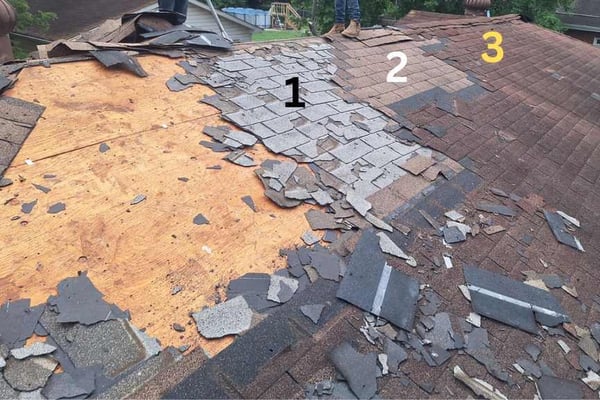 (Three layers of shingles being torn off)
However, most states only allow two shingle layers on a roof for fire safety reasons. So, a roof replacement will be the only option if your roof already has two or more layers.
What are the pros of a roof overlay?
Let's start with the good of a roof overlay. The unfortunate truth is that there aren't many pros besides the affordability aspect.
The pros for a roof overlay are:
- Cheaper than a roof replacement
- Shorter and easier installation
Overlaying is cheaper than a full roof replacement
The main pro of a roof overlay is that it’s cheaper than a full roof replacement. The biggest reason is because there are no labor and dump fees associated with the tear-off process.
You also won’t have to pay to replace certain materials because the entire roof isn’t being replaced. And because of all this, the labor costs as a whole also go down because it takes less time to complete a roof overlay.
A roof overlay has a shorter and easier installation
Speaking of less time, a pro of a roof overlay is that it’s a shorter and easier installation compared to a full roof replacement. Not only does it cut labor and material costs down, but it also means roofers aren't on your property, blocking your driveway, and making noise for as long.
What are the cons of a roof overlay?
Affordability is really the biggest pro of a roof overlay, but there are plenty of cons that must be considered. In fact, your roof may not be a good a candidate for a roof overlay.
Let's look at the following cons of a roof overlay:
- Failing materials can't be replaced
- Can only be done in the right situation
- Repairs are harder to find and fix
- Adding another layers puts more weight on a roof
- Shorter lifespan
- Doesn’t qualify for the best material warranties
- No resale value
- Limited material options
Failing materials can't be replaced
The biggest con to a roof overlay is that failing materials and components aren't being replaced. Once roofing materials and components reach the end of their life, the only thing left to do is replace them because they are no longer viable.
A roof overlay is just putting new shingles over a failing roof like a giant band aid. Well, the problems underneath don't disappear just because they're covered up.
Can only be done in the right situation
To overlay your old roof, the condition and situation must be right. Your current asphalt roof must be lying down flat with no cracks, blisters, or raised shingles.
The roof itself must also have few penetrations, a small amount of flashing, and no walls that butt up against the shingles. And remember, if you already have more than two layers, the only option is to replace the entire thing.
Repairs are harder to find and fix
Because a roof overlay adds another layer over an existing layer, future leaks are harder to track and repair. Water could get underneath the new shingles in one place and then leak into your home through a completely different area on your old roof.
This means both roofs will be repaired in different spots, which can get costly. There’s also no guarantee that the repair will fix the problem the first time because tracking the source is much harder.
Adding another layers puts more weight on a roof
Overlaying new shingles over an existing asphalt roof adds more weight for the roof to hold. This is fine under normal circumstances, but there isn’t a chance to replace any compromised roof decking because your old roof wasn’t torn off.
If the roof decking is rotten or compromised, this extra weight can lead to structural damage and even a cave-in.
Shorter lifespan
A roof overlay will last as long as the top layer of shingles hold up. However, it’s unlikely to last as long as a good quality roof system.
Doesn’t qualify for the best material warranties
The shingles used to overlay an old asphalt roof come out of the package with a material warranty. Depending on the shingle, this will be anywhere from 25 to 30 years (prorates after a certain number of years).
However, a roof overlay doesn’t give you the chance to qualify for the 50-year non-prorated enhanced warranty. This is simply because the roof system wasn’t fully replaced using all the manufacturer's components and materials.
No resale value
A new roof increases your home’s value, which means you’ll recoup some of the cost when selling your home. However, a roof overlay won’t add much or anything to your home’s value.
This is because a multi-layered shingle roof shows up on the inspection report, and there’s really no selling point. All it tells potential buyers is there’s a failing roof under the top layer(s) of shingles.
Limited material options
With a roof overlay, your roofing material options are limited to 3-tab or architectural asphalt shingles. You’ll either have to use the same type of shingle or deal with an aesthetic issue if you upgrade from 3-tab to architectural.
While metal is also an option, I don’t recommend it. This is putting two different roof systems together that will create plenty of headaches if there's ever a problem.
What else should you consider before replacing your roof?
After reading this article, you have a good idea of whether or not a roof overlay is a good option for you. While it can be done correctly, the cons make it a very risky purchase.
That's why it's always best to fully replace a failing roof when it's time and forget about it for the next 20 or so years. However, a roof replacement comes with some decisions and considerations that you need to know about.
That's why I wrote another article breaking down the main things homeowners need to consider when starting their roof replacement journey.
Check out 7 Things to Consider Before a Roof Replacement to get the information you need before diving into the roof replacement process.