
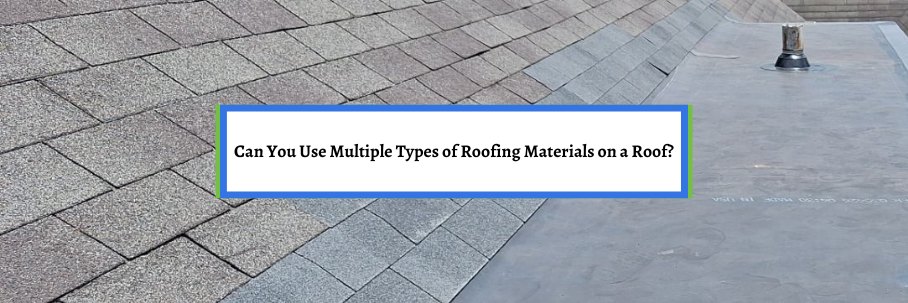

Is it time for a roof replacement? Are you wondering if a roof can have multiple roofing materials installed?
Getting a new roof is a big home improvement project that requires making decisions. And because the roofing material you choose impacts everything from pricing to lifespan, it's important to pick the right one.
However, there are circumstances when multiple roofing materials are used, either voluntarily or because it's required. But why? And what are the reasons?
For over 35 years, Bill Ragan Roofing has provided homeowners with the information they need when making roofing decisions. So, let's look at if you can use multiple roofing materials on a roof, and if so, the reasons why.
By the end of this article, you'll learn:
- Can you use multiple types of roofing materials on a roof?
- What should you know when using multiple roofing materials?
Can you use multiple types of roofing materials on a roof?
Yes, you can use multiple types of roofing materials on a roof. However, this is usually done for aesthetic reasons or because it's required.
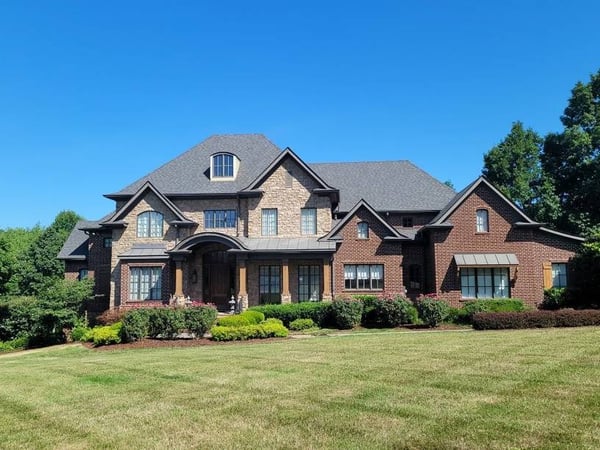 (Lower roof facets with metal and rest of roof with asphalt shingles)
Let's dig a little deeper into when and why homeowners use multiple types of roofing materials on their roof.
Increasing curb appeal
Using multiple roofing materials is a popular way to increase curb appeal. However, this is mainly done by adding metal roofing on front porches, side porches, back porches, bay windows, and more to accent the main roofing material.
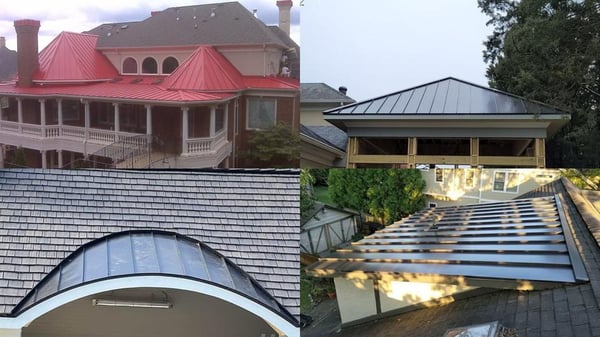
Metal roofing panels have a painted finish that comes in a variety of colors to pick the one that best accents your home and roof. Steel is the most popular accenting option, but copper is the way to go if you really want to raise your home’s curb appeal.
It's more common to see this on roofs with premium roofing materials, but there are plenty of standard architectural shingle roofs with metal accents. The only big downside to copper is the patina look that forms as it ages, which some people don't like the look.
However, it's a lifetime material that is very popular with luxury shingles, synthetic shingles, cedar shakes, etc.
The roof has a flat or low slope area
If your roof has a flat or a low slope area with a pitch that's lower than a 2:12, you need a different roofing material. It’s actually against building codes and the manufacturer’s installation instructions to install standard asphalt shingles on a flat or low slope roof.
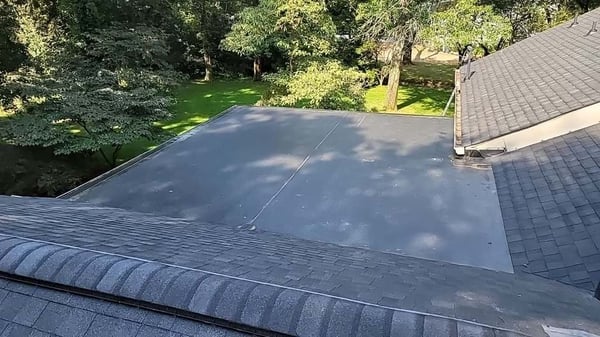 (EPDM membrane on a flat roof facet of an asphalt shingle roof)
So, if your roof has low slope facets, your roof will automatically get multiple roofing materials. You’ll have to choose between one of the membrane roof systems or a metal roof system for the low slope portion while the rest of the roof gets the main roofing material.
Now, this situation is based on the roof, so this won't apply to many homes. On top of this, modern-styled homes have full flat roofs.
What should you know when using multiple roofing materials?
After learning that your roof can have multiple roofing materials based on the situation. While you don't have an option when it comes to a low slope roof, there are some things to keep in mind when your roof has multiple materials in general.
Let's look at the following things you need to know about using multiple roofing materials:
- You need an experienced roofing contractor
- The roofing materials have different lifespans
- Adding another roofing material impacts the overall cost
- Different roofing materials have different warranties
You need an experienced roofing contractor
Different roofing materials require unique skillsets, materials, and experience. Well, doing a combo of roofing materials takes even more skill, especially when tying the whole thing together.
So, it’s crucial to hire a roofing contractor with experience installing the types of roofing materials and the correct way to install them together. If you don't, you'll be looking at extensive roof leaks and widespread water damage.
The roofing materials have different lifespans
Every roofing material has a specified lifespan. So, using more than one roofing materials means there will be difference in the lifespan of the roofing materials.
For example, let’s say you’re getting an asphalt roof replacement and want to add a standing seam metal roof accent over your front porch.
Your asphalt shingle roof can last around 20-30 years (depending on the shingle) as long as it’s properly installed and your attic has adequate ventilation. On the other hand, a standing seam metal roof can last up to 50 years.
In this situation, your metal accent roof will last a lot longer than your entire asphalt roof. So when the time comes to replace your asphalt roof again, you shouldn’t have to replace the metal unless you really want to or if it’s damaged.
Adding another roofing material impacts the overall cost
There are multiple cost factors that impact how much you’ll spend on your roof replacement, including material costs. If you add another roofing material, the material and labor costs go up.
Using the same example as above, this means paying for the metal panels, metal roofing components, and the labor to install them on top of the full asphalt shingle roof. This can add a pretty penny when considering a standing seam metal roof can be up to three times more expensive than asphalt shingles.
Different roofing materials have different warranties
When getting a new roof, you’ll have a warranty on the roofing materials themselves from the manufacturer. But just like lifespan, every roofing material has a different material warranty that even covers separate things.
For example, an architectural asphalt shingle comes out of the package with a 30-year prorated warranty for manufacturer defects on the shingles themselves. On the other hand, metal roof panels come with a warranty that covers the painted finish that's applied to and protects the panels instead of the panels themselves.
Which roofing material is right for your roof replacement?
Now you know you can have multiple roofing materials of a roof, the situations where it's common, and what you need to know about it. Remember, a flat or low slope area has to have a membrane or metal roof system no matter what type of main roofing material you choose.
And other than hiring a roofer, choosing a roofing material is the biggest decision you'll make when getting a new roof. So, it's crucial you have confidence you're making the right one.
That’s I wrote another article breaking down the top residential roofing materials and what every homeowners needs to know about them.
Check out the Top 8 Types of Roofing Materials to learn pricing, lifespans, warranties, pros and cons of the top residential roofing materials in the United States.