
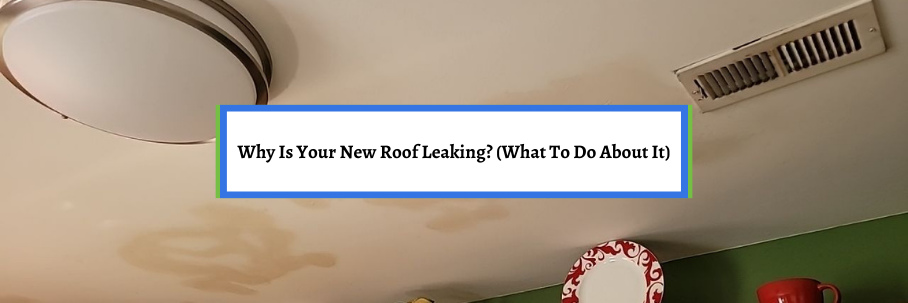

Did you just get a new roof? Is it leaking, and now you're frustrated because you have no idea how this could happen?
After your new roof is installed, you’re not expecting it to leak anytime soon. Unfortunately, this isn’t always the case.
Not only is this frustrating, but it's eats away at the peace of mind a new roof is supposed to provide for decades. Now, you're just left wondering "why". Not only that, but what to do about it.
For over 35 years, Bill Ragan Roofing has provided homeowners with the information needed to get through a stressful and frustrating time That’s why I'll break down the main reasons a new roof leaks and what you should do.
By the end of this article, you'll learn the answers to:
- Why is your new roof leaking?
- What should you do if your new roof starts leaking?
Why is your new roof leaking?
Your new roof leak shouldn't leak under normal circumstances. So, it really takes poor workmanship or special circumstances for it to happen.
In fact, it's possible the leak is coming from something that isn't directly related to your roof. Let's look at the main reasons a new roof is leaking.
Improper roof installation
When a new roof leaks, it's most likely caused by improper installation. This could be caused by anything, from being lazy, using shortcuts to cut down on time and cost, or not caring about doing a good job.
Hiring the cheapest roofing contractor makes this more likely, but the best roofers do make mistakes. So, your new roof leaking doesn’t necessarily mean that there was anything malicious done.
But if a roofing contractor used correct roofing techniques and paid attention to the details, a new roof shouldn’t have problems. And as long as you hired a reputable roofer with a strong warranty, they should come take care of any leak caused by improper installation.
Chimney leaks
If it's not improper installation, a chimney problem is almost always the reason a new roof is leaking. Unfortunately, there are many reasons why a chimney could be leaking, and some aren't even a roofing issue.
If the roof flashing surrounding a chimney wasn't taken care of during your roof replacement, it could be there's not a watertight seal. If you have a brick chimney, the mortar joints can become saturated from prolonged periods of rain to where water enters the interior surrounding the chimney.
Another common reason is water coming down through the top from cracking, rusting, and the fasteners becoming loose. Whatever the reason, your roofer can help you determine the problem
Extreme weather conditions
A new roof, even an older roof, is designed to prevent leaks. However, extreme weather conditions can actually send water places that normal rain wouldn't.
Driven rain going sideways at high wind speeds can hit the perfect spot and lead to a leak that wouldn't happen under normal circumstances. This is especially true on very complex roofs that have a lot of cut up facets and details.
Another weather issue that causes a new roof to leak is ice dams during snow or ice storms. Ice dams don't allow water to drain normally, causing it to back up your roof and leak inside.
As I said, these weather related leaks happen in extreme circumstance. But you can do things to help prevent them if you talk about it with your roofer before installing your new roof.
What should you do if your new roof starts leaking?
As you know, there are multiple reasons your new roof is leaking. So, you won't truly know the answer until someone can look at it.
However, you should be proactive as soon as you notice your roof leak.
Call the roofing contractor that installed your roof
The first thing you should do is to call your roofing contractor immediately. A reputable roofing company will come take a look as soon as possible to find a solution.
If they're backed up, they may send someone over to tarp the area that's leaking until they can actually look at the problem deeper. Now, this is considering you hired a reputable roofing company.
But unfortunately, there are plenty of horror stories where the roofer won't answer the phone. If this happens after trying for multiple days, find another one before the leak causes serious interior damage.
Contain the roof leak
While waiting for your roofing contractor, you try to contain leak as much as possible to prevent widespread damage. If you attic access, put a bucket or pot directly underneath to catch water as it comes through your roof.
If you don’t contain the water, the cost to repair the water damage inside your home gets expensive very quickly. Just don’t do anything to the roof itself or you'll void any active warranty.
Take a picture of the leak and interior damage
At the same time, you should take photos of the leak and any interior damage, like stains or dark spots. You can send this to your roofing contractor to show severity, and even give them an idea of where the leak is coming from.
This also will show if the leak is getting worse if the spot grows over time, which helps determine urgency.
Check your roof warranty paperwork
After doing everything else, you should check your warranty paperwork. The warranty information helps you figure out if your roof leak will be covered.
If it’s a leak caused by improper installation, your roofing contractor’s workmanship warranty should cover any cost to repair the issue. Just keep in mind this also counts on the roofer standing behind their.
If you made the wrong hiring decision, they might not honor the warranty at all and make you pay for the repair.
How long should your new roof last?
The truth is, no one expects their new roof to start leaking. If it does, hopefully you hired a roofing contractor that does things the right way.
They should honor their warranty and take care of the problem at no cost to you. After that, you can expect a roof that won't leak for at least a decade and longer.
Then when the materials fail, you'll start the process all over again before leaks show up again. But are you wondering how long your roof is supposed to last without leaking?
This is one of the biggest questions in the roofing industry. So, let's break it down.
Check out How Long Will Your New Roof Last to learn how many leak-free years you can expect to get out of your new roof.